Echoes of the Night 夜間召喚術 | 2025
Audiovisual Performance
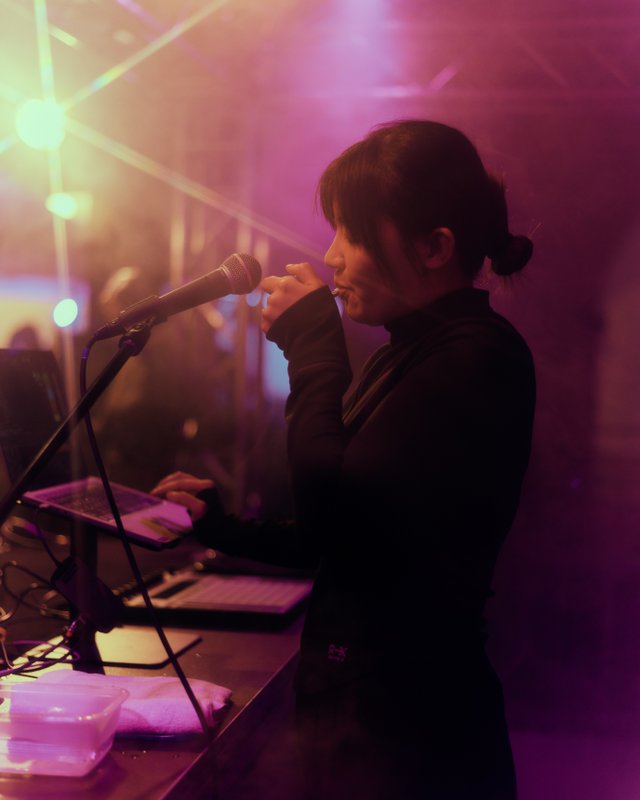
Artist Yen Tzu Chang has been focusing on natural issues in recent years, deeply exploring the overlapping phenomena between nature and human environments. Against the backdrop of urban expansion, this presents a complex process of bidirectional adaptation: on one hand, animals gradually adapt to human living spaces, learning to survive on the edges of cities or within communities; on the other hand, human residential areas continue to expand, persistently compressing the original habitats of wildlife and forcing them to enter human territories in search of new living spaces. The phenomenon of cohabitation between humans and wildlife brought about by environmental changes has become increasingly evident throughout Taiwan. While many people have begun to understand and accept the plight of these animals, recognizing the importance of ecological conservation, others feel troubled by animals approaching residential areas, sometimes even leading to intense conflicts.
This sound creation deeply records and reorganizes field sounds of animals and humans from towns in southern Taiwan, with particular focus on nightjars as a unique species. Nightjars are originally nocturnal birds that primarily feed on insects, with their distinctive high-frequency calls being particularly prominent at night. Over approximately ten years starting from 2009, factors such as climate change and habitat destruction have caused these birds, originally native to wild mountain forests, to begin migrating to human living spaces, nesting and roosting around street trees, rooftops, utility poles, or buildings. Consequently, more and more residents have been hearing the high-decibel calls of nightjars in the evening in recent years, with some viewing them as a beautiful symbol of nature’s return, while others consider them noise pollution.
The work combines the sudden bursts of high-decibel sounds from nightjars with the natural soundscape of surrounding crickets, frog calls, and other sounds, while attempting to incorporate sounds produced by human nightlife activities (such as night markets, karaoke, etc.) as a point of contrast. Through electronic music technology, these elements are reconstructed to create a sound environment that is both realistic and surreal, presenting the complex possibilities of coexistence between humans and the natural environment. The visual component employs quirky clay sculpture techniques to create nighttime forest scenes that are both childlike and eerily atmospheric, vividly depicting the constantly calling nightjars in their foraging activities, imagining them as mutated mythical creatures that exist between reality and fantasy, wandering between forests and buildings. Through the interweaving of sound and visual arts, this creation explores the starting point and imagination for harmonious coexistence between humans and other living beings.
藝術家張晏慈近年關注自然議題,深入探討自然與人類環境的重疊現象。在都市擴張的時代背景下,呈現出複雜的雙向適應過程:一方面動物逐漸適應人類居住空間,學習在城市邊緣或社區中生存;另一方面人類居住範圍不斷擴張,持續壓縮野生動物的原有棲地,迫使牠們進入人類領域尋找新的生存空間。環境變遷所帶來的人與野生動物共居現象,在台灣各地日漸明顯。雖然許多人開始理解並接納這些動物的困境,認知到生態保育的重要性,但同時也有人因動物靠近居住區而感到困擾,甚至引發激烈衝突。
本次聲音創作深度收錄並重組台灣南部鄉鎮間的動物與人類田野聲音,特別聚焦於夜鷹這一獨特物種。夜鷹原為夜行性鳥類,以昆蟲為主食,其獨特的高頻鳴叫聲在夜間格外突出。約從2009年開始的十年間,氣候變遷與棲地破壞等因素,導致這些原生於野外山林的鳥類開始遷移至人類居住空間,在路樹、屋頂、電線桿或建築物周圍築巢棲息。因此近年來越來越多居民在晚間聽到夜鷹的高分貝鳴叫聲,有些人將其視為自然回歸的美好象徵,有些人則認為是噪音干擾。
作品結合夜鷹瞬間爆發的高分貝聲響與周圍蟋蟀、蛙鳴等自然音景,並嘗試融入人類夜間生活所製造的聲音(例如夜市、卡拉OK等)作為相互對比,透過電子音樂技術重新組構,創造出既真實又超現實的聲音環境,呈現人類與自然環境共生的複雜可能性。視覺表現部分以古怪黏土雕塑技法,塑造出帶有童趣卻又帶著詭異氛圍的夜間山林場景,生動描繪不斷叫囂的夜鷹覓食活動,將牠們想像為介於現實與幻想之間、遊走於林間與建築物間的變異神獸。透過聲音與視覺藝術的交織,此創作探索人類與其他生物和諧共存的起點與想像。
Concept/Sound Design/Performance: @chang_yentzu
3D Bird Whistle Design/3D Printing: @hhymade @kaveku
Photo by Sound Campus 📸 @sabiswabis
The Sound Campus team @sound.campus of 2025:
Curatorial Team: Gabriela Gordillo @cupasoup Andreea Vladut
Design: Viktoria Angyal @angyalviki
Social media communication: Angélica Sabina Piñeros @sabiswabis
Sound technician: Reinhard Reisenzahn @reinhardreisenzahn
Technical support: Hedieh Khajehzadeh @iminusid
In collaboration with Kunstuniversität Linz @kunstunilinz, DORFTV @dorftv and Radio FRO @radiofro.
Special thanks to the Time-based Media Department at Kunstuniversität Linz
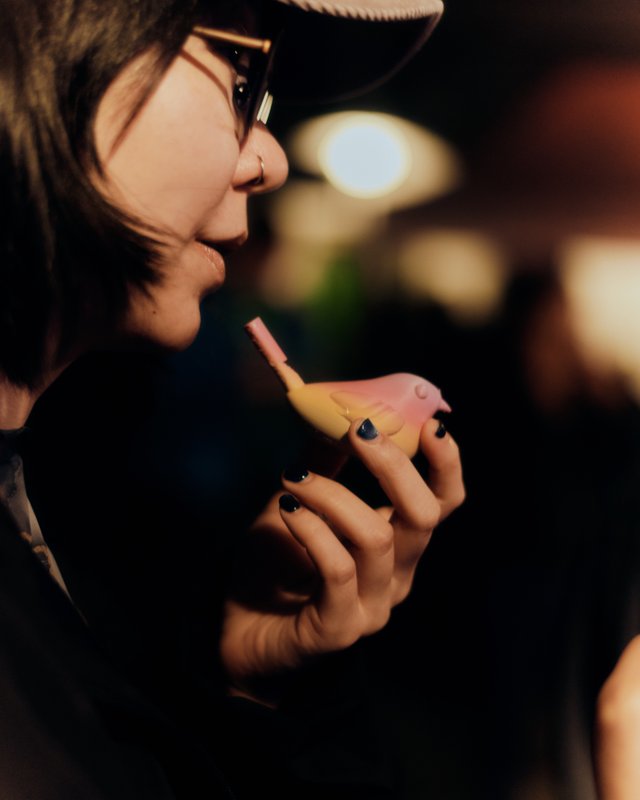
Photo by Sound Campus 📸 @sabiswabis
Photo by Sound Campus 📸 @sabiswabis
Photo by Sound Campus 📸 @sabiswabis
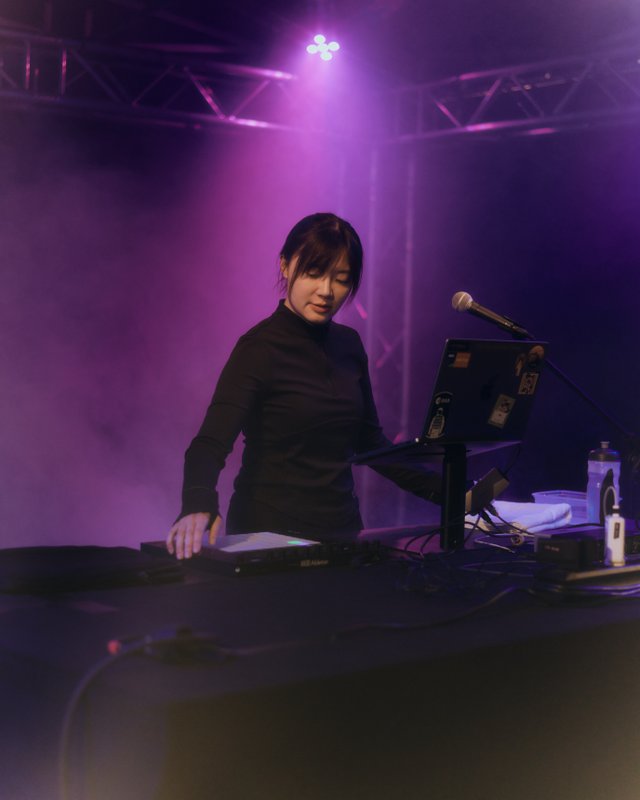
Photo by Sound Campus 📸 @sabiswabis